
Civil society organisations (CSOs) practising a different kind of accountability towards their stakeholders is at the heart of the Global Standard’s mission and purpose. The kind of accountability where an organisation answers to the people who they work for and with, not only in terms of financial management or transparency, but going beyond that to ensure that its work and programmes are informed by them. In this blog, CSOs are defined as organisations who are: independent from the state, pro-human rights, and working with and/or advocating on behalf of civil society.
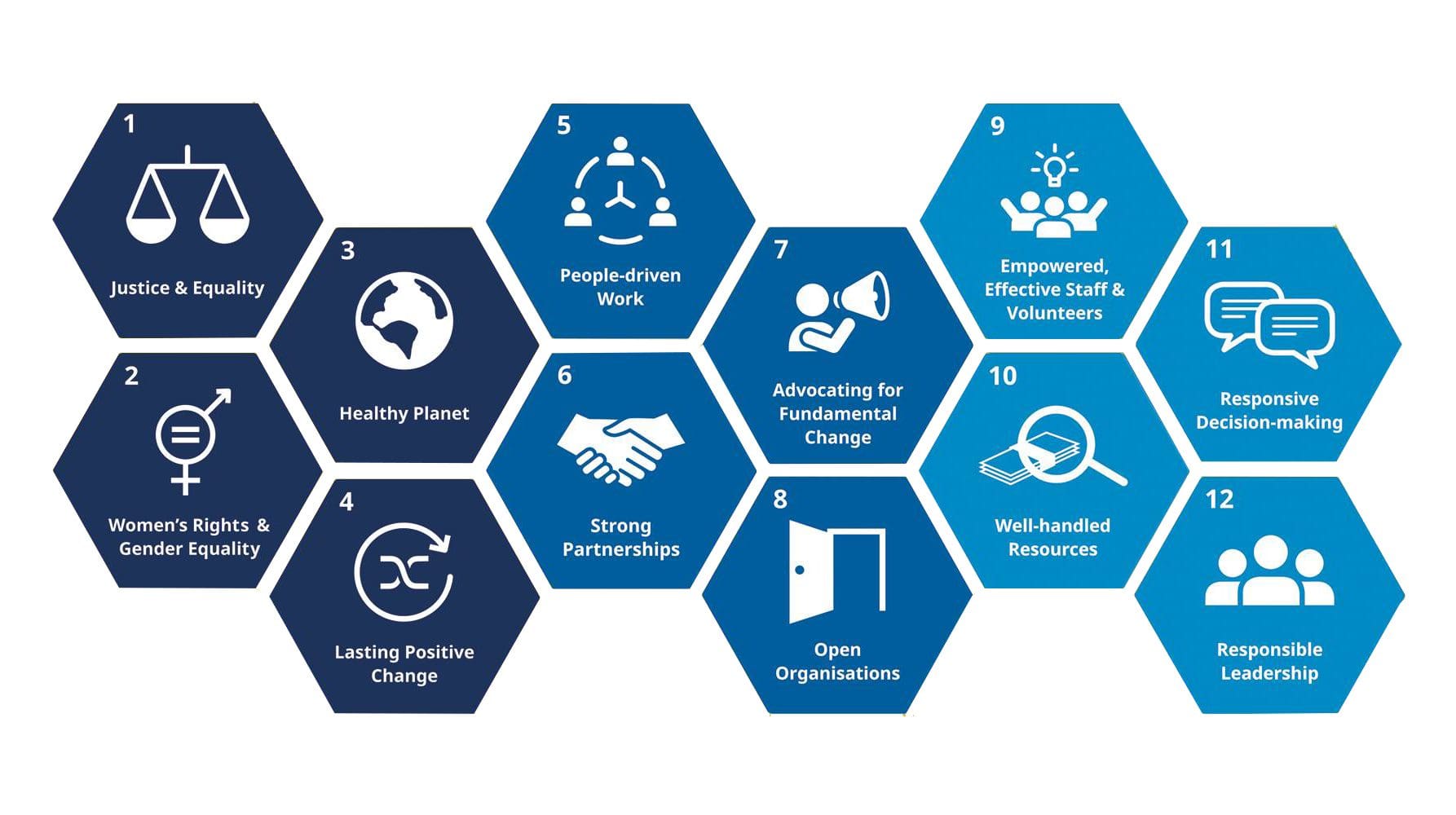
The Global Standard 12 Commitments is an accountability reference framework that will support organisations in that journey. The framework is free, flexible and open-sourced for CSOs wishing to improve their accountability practices towards all stakeholders, moving away from a tick-box exercise. The 12 Commitments are divided into three clusters, addressing the following areas: What We Want to Achieve, Our Approach to Change, and What We Do Internally. Together, the clusters guide CSOs to transform their accountability practices by putting the people that they work for and with at the core of their work. The 12 Commitments were co-created through extensive rounds of consultations with local organisations by 9 accountability networks around the world who are also Global Standard Partners (Accountable Now – Secretariat, ACFID, BCSDN, CCC, DENIVA, InterAction, Rendir Cuentas, VANI, Viwango). It is a universally valued set of guiding principles for CSOs to base their organisational accountability practices on, enabling CSOs to adjust the implementation according to their contexts and needs.
The Global Standard framework is a tool to practice dynamic accountability – an approach that is alternative to the usual top-heavy and regulation focused forms of accountability, backed by the idea that CSOs are not only accountable to their donors and governments, but primarily to their constituents and stakeholders in the community. This approach recognises the importance of trustful partnership and horizontal relationship building between CSOs and stakeholders. Through implementing dynamic accountability practices like meaningful engagement, continuous learning through closing feedback loops, and participatory decision making, CSOs shift the power towards those whose lives are impacted.
This blog is part of CDA’s From Where I Stand series, designed to listen to people most affected by aid as they explore and amplify their leadership experiences, stories, and lessons for the aid sector.
You must be logged in in order to leave a comment