
Conflict Snapshot: Coastal Kenya (Oct–Nov 2025)
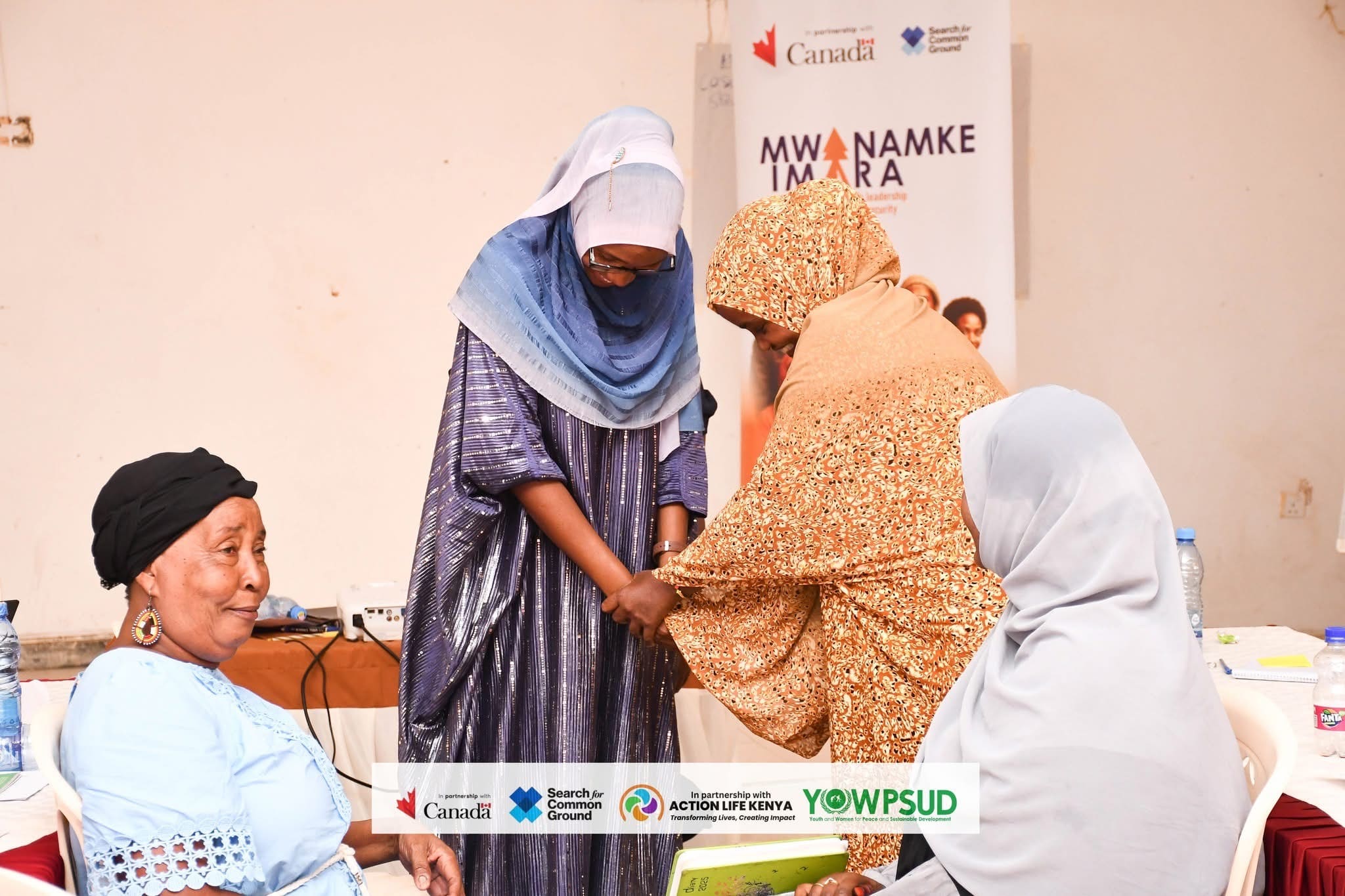
Mwanamke Imara – Strengthening Women’s Leadership in PCVE among state security & justice institutions
The 1st conflict snapshot from Search for Common Ground Kenya highlights emerging peace and conflict trends across Lamu, Tana River, Kilifi, and Kwale counties between October and November 2025, captured through real‑time community observation under the Mwanamke Imara project.
Key trends across the four counties
Over the two‑month period, 122 conflict incidents were documented. Violence remains the most dominant driver of instability, including physical attacks, threats, and insecurity in public spaces.
Deepening polarization, political tensions, and grievances around legitimacy of local institutions also continue to escalate friction.
Major Conflict Drivers Identified
- Violence & crime: Youth‑linked violence, gang activity, retaliatory attacks, and mob justice remain widespread, especially in Kwale and Kilifi.
- Resource‑based conflicts: Land, water, grazing, and marine disputes are particularly acute in Lamu and Tana River.
- Political tensions: By‑election campaigns in Tana River and Kilifi triggered confrontations, online hate speech, and disputes over political interference.
- Community aggression: Localized unrest such as protests, blockages, and mob attacks actions continues to shape public insecurity.
- Protection concerns: Persistent cases of intimate partner violence, defilements, sodomy and abductions were reported, with intimidation of witnesses often hindering response.
Cross‑cutting issues
- Online spaces are becoming increasingly harmful, with spikes in hate speech, misinformation, manipulated images, and non-consensual sharing of intimate images and videos observed.
- Trust deficits in governance and local institutions continue to heighten tension.
Early warning risks:
- Retaliation cycles (youth/gangs, herder–herder, farmer-herder political rivals) recur and intensify where justice is perceived as delayed or partial, and rumor/disinformation circulates unchecked.
- Administrative service delivery gaps feed community aggression and protest mobilization.
- Weak governance and declining institutional trust continue to weaken public trust, reducing confidence in fair, transparent, and accountable leadership.
- Digital amplifiers (rumors, hate speech, misinformation) are increasingly front‑end triggers, with offline consequences around politics, local leadership and women safety.
- Gendered exclusion in police recruitment and hostile narratives against women leaders undermines women leadership in P/CVE the project aims to strengthen.
You must be logged in in order to leave a comment